A website for an electrician that brings the work in.
A website for an electrician has one job, which is to turn somebody searching at half past nine at night into a booked job. We build the site, the back office behind it and the app your engineers use, so the work you win stays in one place.
Domestic, commercial and EV work. Suffolk, Essex and anywhere in the UK you can reach.
Why do electricians lose work they never hear about?
Because it goes to whoever answered first, and nobody rings back to tell you they went elsewhere. You are up a ladder, the phone goes, and by the time you have your hands free they have called the next one on the list. Nothing breaks and nobody complains, which is exactly what makes it hard to notice.
 Who answers the ones you miss →
What does an electrician's website actually need to do?
Four things. The site says what you do and where, and it takes the booking when you cannot answer the phone.
Say what you do, where, and roughly what it costs
Consumer unit changes, EICRs, EV chargers, rewires, fault finding. Named the way a customer names them, not the way the trade does, with the towns you actually cover.
Take the job when you cannot answer the phone
A form that still works on one bar of signal, which is a normal afternoon on a building site and is how a lot of enquiry forms quietly fail.
Put the enquiry somewhere it cannot get lost
Not an inbox. A back office, where every enquiry has a status, a note of what was said, and who is dealing with it. So the ones that came in while you were up a ladder still get answered.
Get in front of somebody who has not heard of you
A page for each job you do and each town you work in, built so Google and the AI assistants can read every word without anything having to load first.
What actually gets me found for “electrician near me”?
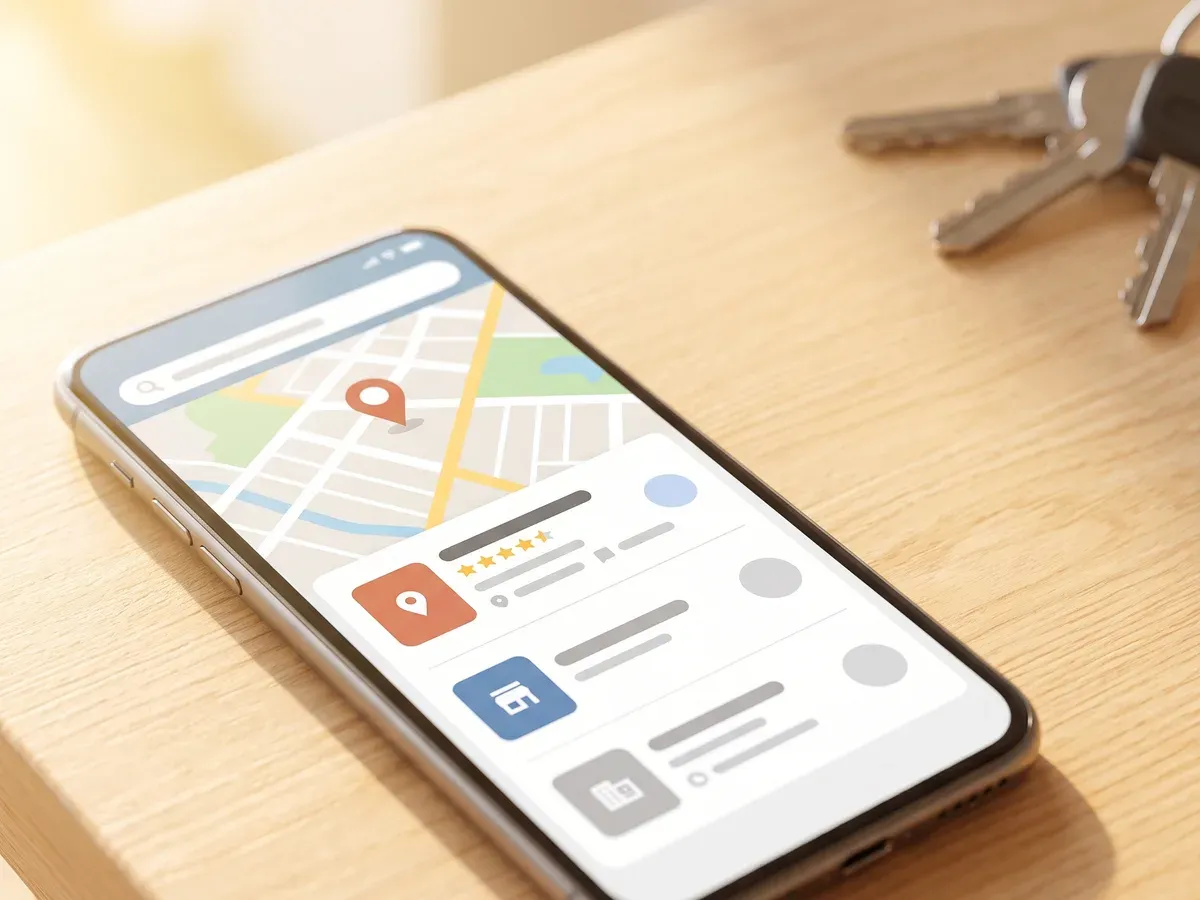
Your Google Business Profile, a page that genuinely answers the question somebody typed, and reviews from real customers. So that is where the work goes.
We set the first up properly, we build the second, and the third is a habit we put into the job-completion routine so it happens without you remembering.
How the listing work is done →Will an assistant put me forward when somebody asks for an electrician?
Customers are starting to ask an assistant instead of searching. They describe the fault in a sentence and get one answer back naming somebody. Google writes that kind of answer above the blue links now, so it reaches people who never opened an assistant at all.
- Assistants match facts, not phrases. So the work you actually take on, the towns you cover and your call-out terms go on the page as text where they can be read.
- Your registration number links to the register that issued it, so the one claim a customer can check while standing there opens the entry rather than a homepage.
- None of it is a fourth service. Google's own guide says the best practices for search still apply because its AI answers are built on its ordinary ranking systems.
What happens to an enquiry after it arrives?
The enquiry turns into a job with a status on it, in your own back office, before anybody has typed a word back. Nobody asks that question until six months in, and it is the one that separates us from a web designer. Five agency sites were measured on 11 August 2026 and not one of them sells anything that happens after the form is submitted.
The enquiry lands in your own back office
Every enquiry on one list, with where it has got to, instead of an email you have to remember. It is safe the second they press send, so you keep the job even if your email is playing up.
You answer it from the same screen
The reply goes from your own domain, in your name, and the exact words are kept against the enquiry. When they reply, that comes back in automatically and sits under it.
The enquiry becomes a job, in one press
Lead to customer, quote to job, job to invoiced. If a transition takes a page of manual steps nobody does it, and the records rot.
Your engineers see it on their phones
Today's jobs, the address, the customer, the gate code, and work marked done with photographs. Built for one hand, outdoors, on a bad signal.
The certificate paperwork stops being an evening job
Photographs and notes captured on site, against the right job, at the time it happened, instead of being reconstructed at the kitchen table on Sunday.
AI goes on top, only when it earns its keep
Drafting the reply, chasing the quote nobody answered, pulling figures off a supplier invoice. Always as a draft a person approves, never sent on its own.
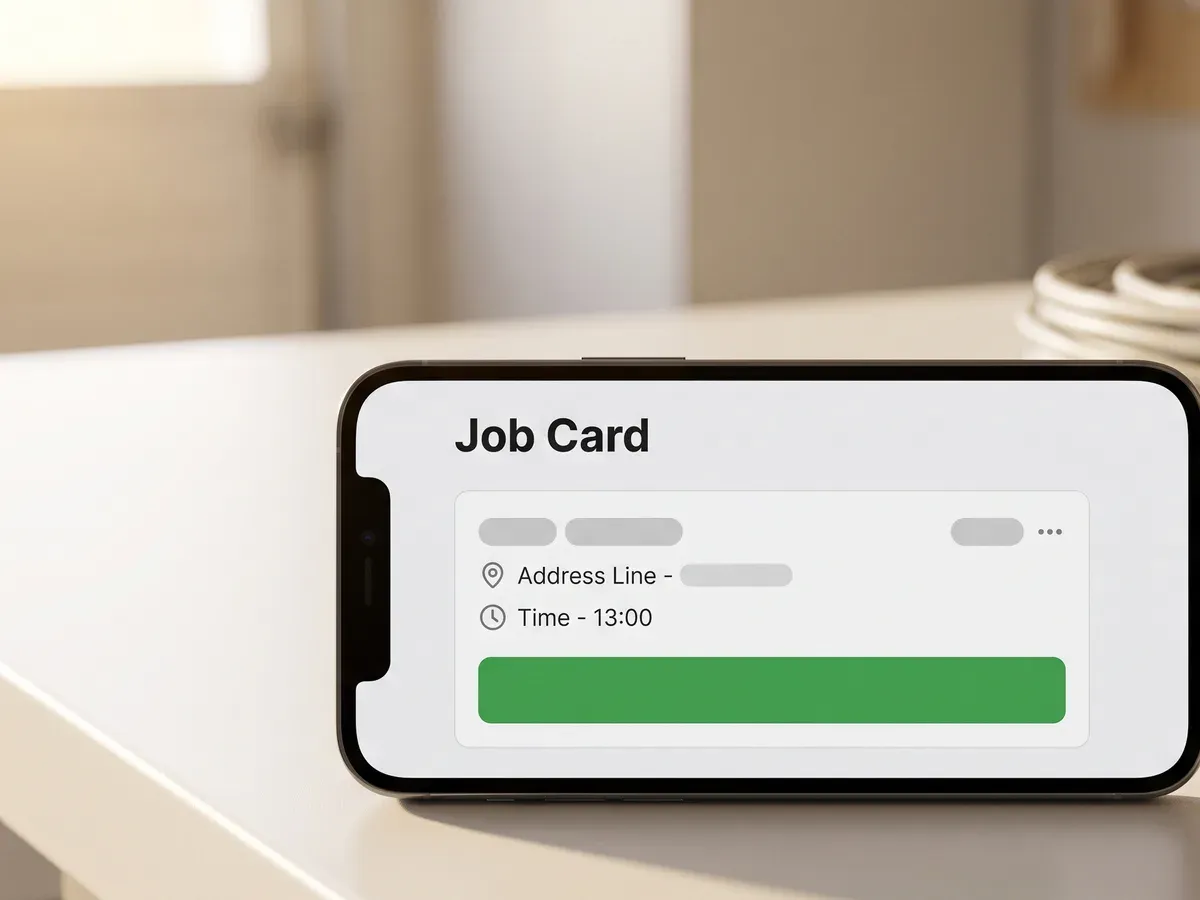
The back office comes with Growth and Full.
What goes on the page about registrations?
Whatever you are actually registered for, looked up on the public register and dated. NICEIC and NAPIT both run public registers anybody can search. If you are registered we show your number and link it straight to the register that issued it.
A number a customer can check in seconds is worth more than a logo. Your insurance and the certificates you actually issue carry the same kind of weight, so they go on the page too.
How the words get written and checked →How much does an electrician's website cost?
Our prices are on the home page and they do not move depending on who is asking. Three of the five agencies measured make you request a quote, which usually means the number is decided after they have seen how much you can afford.
A one-off to build it, then a monthly to run it
The build is the site, the copy, the photographs organised, the Business Profile set up and the whole thing put live on your own domain. The monthly is hosting, changes, and keeping it working.
The back office and the staff app are the step up
Every plan starts with a website that works properly, so you get the enquiries whichever tier you are on. The ones above it are where the enquiry turns into a job and your engineers get the app. That is the difference you are paying for, said plainly.
Anything we pass through, we say so
Your domain, and your advertising budget if you run ads, are yours and go straight to whoever provides them. Our fee is our fee and it is never quoted as though it covered your spend.
Yours to keep
The site is yours, in your name, and so is everything in it. One month's notice, and that month is when we hand it all over.
Where your money goes
- A page for every town you genuinely cover. Google filters out the ones aimed at towns you do not, so those win you nothing and we do not make them.
- Listings on the registers a customer checking an electrician actually uses. Earned entries, never bought links.
- A page written when there is something real to say, like a change to the wiring rules your customers ask about. Never a post a week about nothing.
- Live chat once the site is busy enough for somebody to answer it. Until then the money goes into being found and into taking the booking.
- Your NICEIC or NAPIT number and any scheme that genuinely gave you a badge, in text a customer can check in seconds.
Every price we charge is on one page, with exactly what each tier covers.
What catches electricians out when they change website?
Losing the email. The settings that point your website at where it lives are the same settings that point your email at your mailbox, and the commonest way a switchover goes wrong is somebody moving one and taking the other down with it.
We write down every record before anything is changed, move the site first, and leave the mail records exactly where they are.
It is the highest-risk hour of the whole job, and you may not hear about it until it goes wrong.
The whole switchover, step by step →Where does the enquiry actually land?
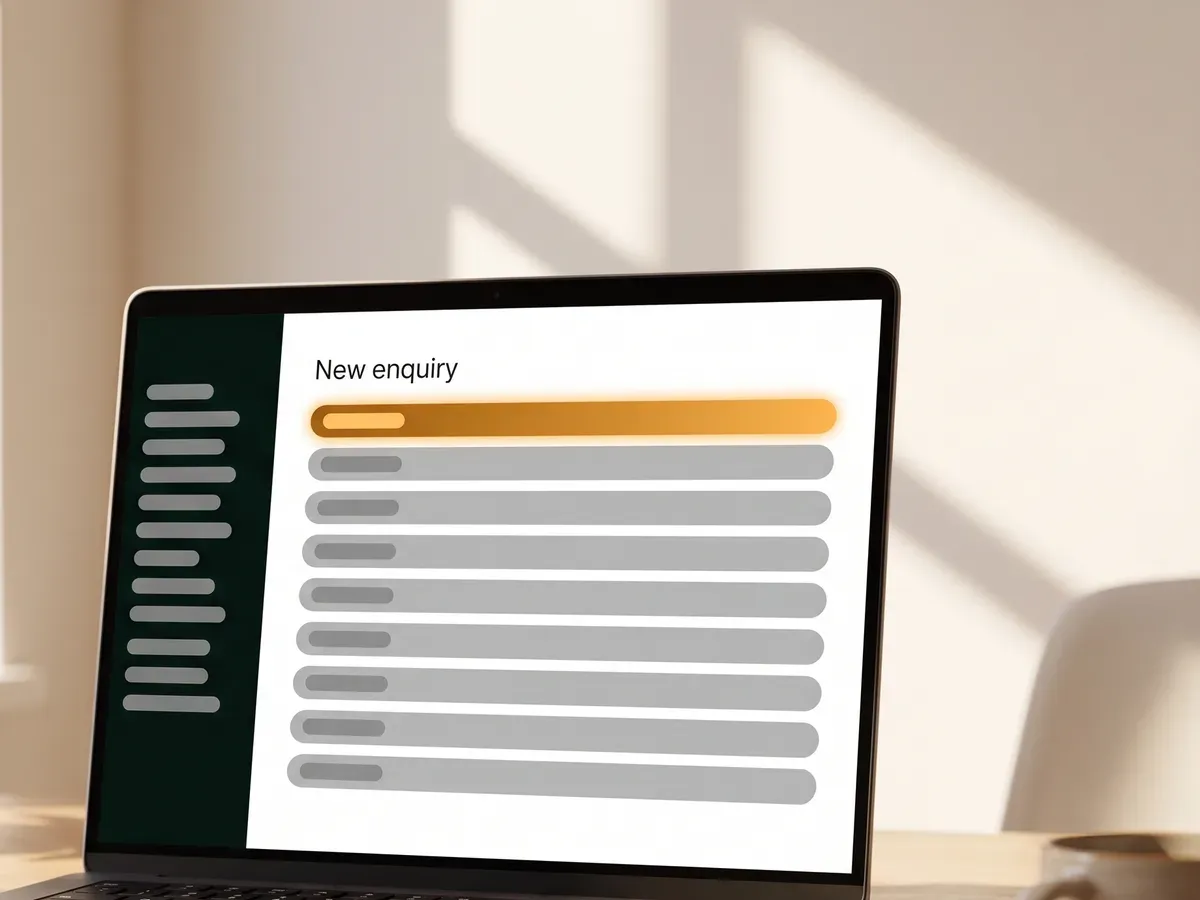
In your own back office, on one list with where it has got to, so you can find any of them in seconds. The enquiry is saved before anything is emailed anywhere, so a mail provider having a bad afternoon cannot lose you a rewire.
New ones sit at the top, the reply goes from your own address and stays against the job, and when the customer answers, their answer comes back in on its own and sits underneath it. Nobody is copying anything into a spreadsheet.
What a back office keeps against every job you win →What would you rather be doing on a Sunday evening?
Tell us where the enquiries come from and what happens to them, and we will tell you which part of it can look after itself. Nothing to pay for the conversation.
Nothing to pay, and nothing to sign. If you would rather read first, the home page has the prices and everything that is in each tier, and AI implementation is the separate track for automating a process rather than building a site.
What else is worth reading?
Every page here answers one question properly rather than skimming five. These are the others, and each one says what it is before you click it.
Websites for plumbers and heating engineers
When the heating goes they ring whoever answers. A site that says you are Gas Safe registered and takes the job, plus the back office behind it.
Websites for roofers that get the job priced
A roofing website that takes the photograph with the enquiry, the back office it lands in, and the app your team uses. Published prices, no lock-in.
Foothold AI: websites and AI for local service businesses
A website that gets found, a back office that runs the day, and an app for your team. From £295 to set up and £99 a month. Suffolk based, UK wide.
Where we work: Suffolk and north Essex
Twenty towns across Suffolk and north Essex, from Sudbury. Most are twenty or thirty minutes away, and the person who builds your site comes out.